Does your daily commute involve frequent traffic jams, or do you enjoy having greater control over gear changes while driving?
Your transmission choice can make a difference to your everyday driving experience, especially when you use your car regularly for office commutes, shopping trips and family outings.
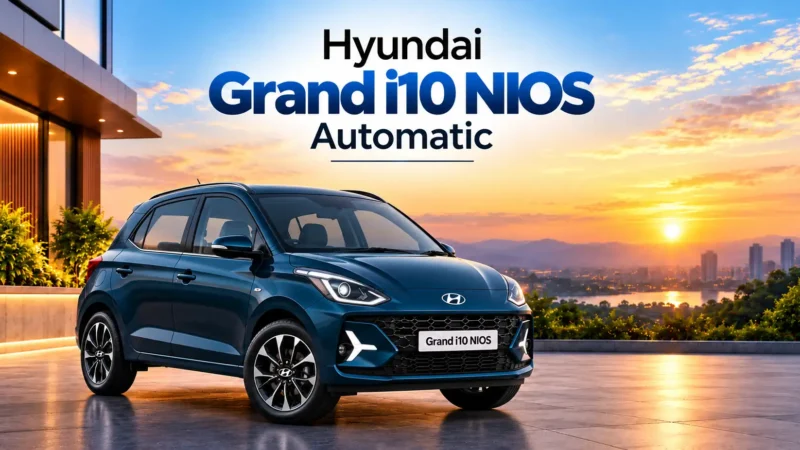
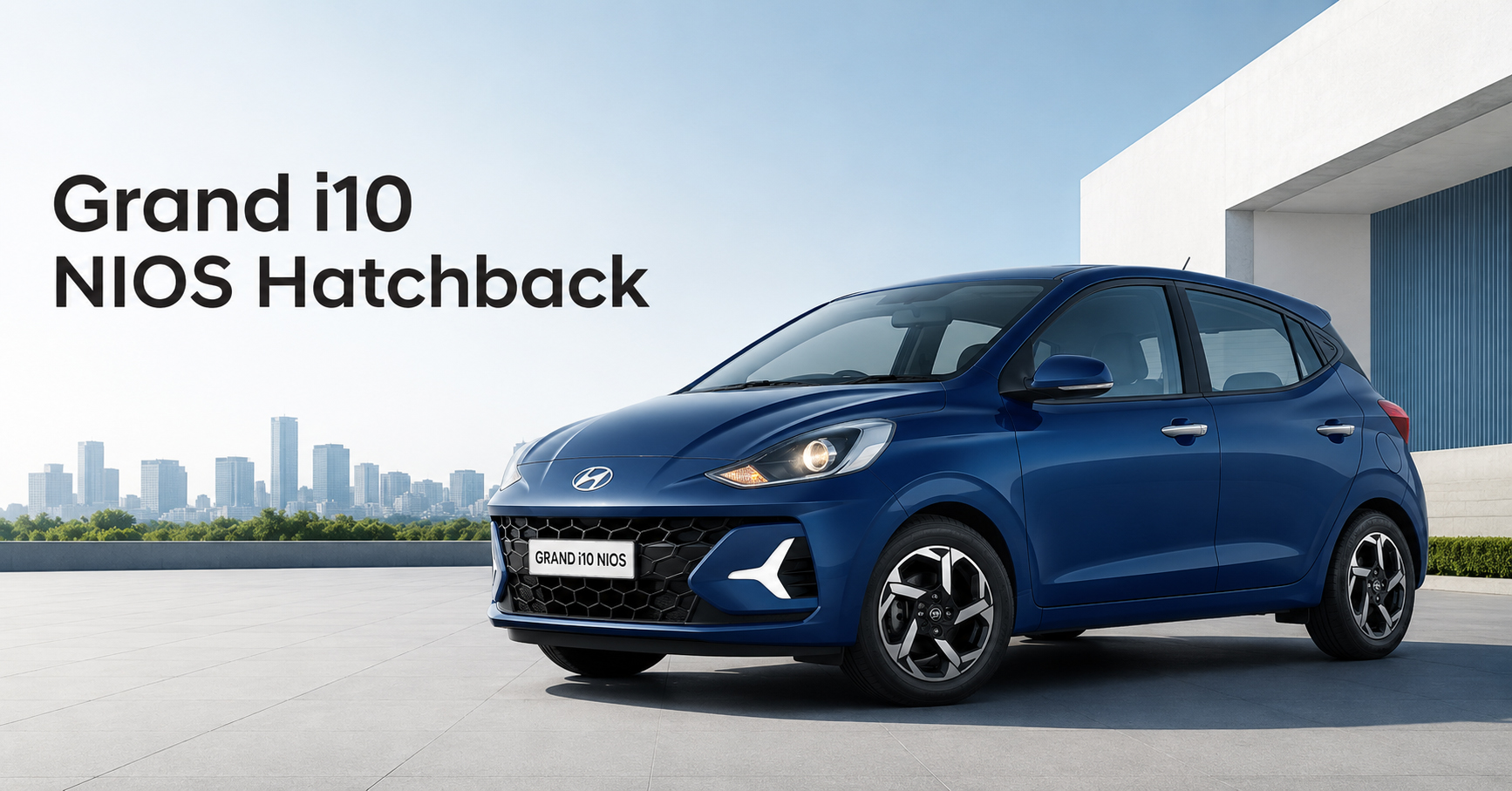
The Hyundai Grand i10 Nios offers both manual and AMT transmission options, giving buyers the flexibility to choose according to their driving habits. While the manual gearbox appeals to drivers who prefer direct control over gear changes, the AMT option offers added convenience in stop-and-go traffic.
Both options come with the 1.2-litre Kappa petrol engine, but they deliver different driving experiences. Before making a decision, it is worth comparing their performance, convenience, features and pricing.
Hyundai Grand i10 Nios Manual and AMT Options
The Hyundai Grand i10 Nios comes with a 1.2-litre Kappa petrol engine paired with either a five-speed manual transmission or an automated manual transmission (AMT), depending on the selected variant.
The manual version requires the driver to operate the clutch and shift gears. It offers direct control over gear selection, which can appeal to people who prefer a more involved driving experience.
The AMT version automates clutch operation and gear changes. The driver does not need to operate a clutch pedal, making the car easier to manage in regular traffic.
Both transmissions serve different driving preferences:
- Manual transmission: Suitable for drivers who prefer direct gear control and are comfortable operating a clutch.
- AMT transmission: Suitable for drivers who want clutch-free convenience, particularly during frequent city commutes.
Your daily driving conditions and personal preferences should guide the final decision.
How Does the Manual Hyundai Grand i10 Nios Perform?
The manual Hyundai Grand i10 Nios is worth considering if you enjoy controlling gear changes according to road conditions and driving requirements.
Its five-speed manual gearbox allows drivers to select gears based on speed, traffic movement and road conditions. This can be useful when navigating different city routes or driving on highways.
Key advantages of the manual transmission
Greater control over gear changes
The manual gearbox allows you to decide when to shift gears. Drivers who prefer controlling acceleration and engine response may appreciate this flexibility.
Familiar driving experience
Many drivers are already comfortable with manual cars. If you have been driving a manual vehicle for years, the Grand i10 Nios manual may feel familiar and easy to adapt to.
Suitable for varied driving conditions
Manual gear selection can be useful when driving on roads with changing gradients, during overtaking or when managing different traffic conditions.
A practical choice for regular driving
If your daily routes involve a reasonable mix of moving traffic and open roads, a manual transmission can offer a familiar and predictable driving experience.
However, frequent clutch operation may become tiring during long periods of slow-moving traffic. This is an important factor to consider if you regularly drive through congested areas.
What Makes the AMT Hyundai Grand i10 Nios Convenient?
The AMT version of the Hyundai Grand i10 Nios is designed for drivers who want the convenience of automated gear changes without a conventional clutch pedal.
Unlike a manual transmission, an AMT system manages clutch operation and gear shifts automatically. The driver can focus more on steering, braking and monitoring traffic.
Key advantages of the AMT transmission
Convenience in heavy traffic
Delhi’s busy roads often involve repeated stopping and starting. An AMT eliminates the need to operate a clutch pedal repeatedly, which can make everyday commuting more convenient.
Easier driving for new drivers
Drivers who are still getting comfortable with manual gear changes may find an AMT easier to operate. It reduces the need to coordinate clutch movement and gear selection.
Less effort during daily commutes
Without a clutch pedal, drivers can manage slow-moving traffic with fewer manual operations. This can be helpful when travelling during busy office hours.
Automated gear selection
The transmission changes gears automatically according to driving conditions, reducing the need for frequent manual intervention.
AMT systems can feel different from conventional automatic transmissions. Drivers may notice pauses or slight interruptions during gear changes. Taking a test drive can help you understand whether this driving behaviour suits your preferences.
Manual vs AMT: Which Is Better for City Driving?
City driving often involves traffic signals, narrow roads, sudden slowdowns and frequent stops. Your transmission choice can influence how convenient these journeys feel.
The manual Hyundai Grand i10 Nios gives you direct control over gear selection. However, driving through congested roads requires repeated clutch operation and gear changes.
The AMT version removes the clutch pedal from the driving process. This can make repeated stop-and-go movement easier to manage, particularly during office commutes.
Consider the following comparison:
| Driving requirement | Manual | AMT |
| Clutch operation | Required | Not required |
| Gear changes | Driver-operated | Automated |
| Heavy traffic | Requires frequent clutch use | More convenient |
| Driver involvement | Higher | Lower |
| New-driver convenience | Requires clutch and gear coordination | Easier to operate |
| Driving preference | Direct gear control | Clutch-free convenience |
If most of your driving takes place in congested city traffic, the AMT may be a more convenient option. If you prefer controlling gear changes yourself, the manual version may suit you better.
How Do Manual and AMT Versions Compare on Highways?
The transmission choice also matters when you regularly travel outside the city.
The manual Hyundai Grand i10 Nios allows you to select gears according to your speed and driving requirements. Drivers who enjoy controlling the car during acceleration and overtaking may prefer this setup.
The AMT version offers automated gear changes, which can make highway cruising convenient. However, the timing of gear shifts may feel different from a conventional automatic gearbox.
Both versions use the same 1.2-litre Kappa petrol engine, so the transmission preference should depend on the type of driving experience you want.
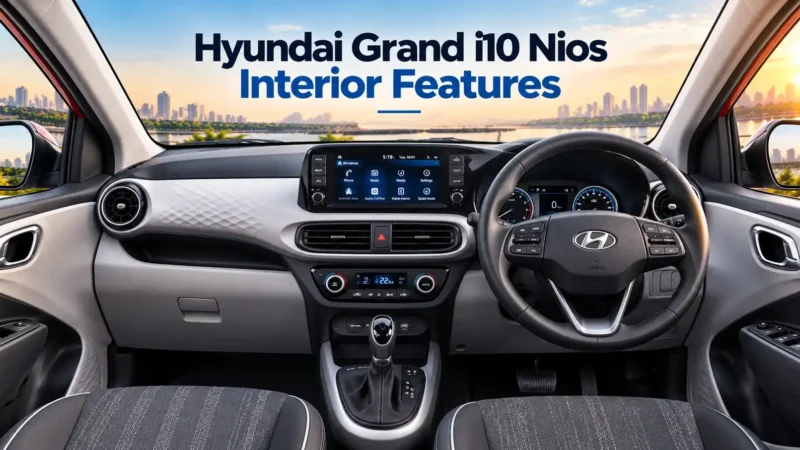
What Features Does the Hyundai Grand i10 Nios Offer?
The Hyundai Grand i10 Nios offers a range of convenience, entertainment and safety features, with availability depending on the selected trim.
Some of its notable features include:
Comfort and convenience
- Automatic climate control in selected variants
- Rear AC vents
- Electrically adjustable and foldable outside mirrors, depending on variant
- Driver seat height adjustment
- Tilt steering
- Smart key with push-button start/stop in selected variants
- Wireless phone charger in the top variant
Entertainment and connectivity
- Touchscreen infotainment system in selected variants
- Android Auto and Apple CarPlay support
- Steering-mounted controls
- USB charging facilities
- Cruise control in selected variants
Safety features
- Six airbags
- Electronic Stability Control (ESC) in specified variants
- Vehicle Stability Management (VSM) in specified variants
- Hill Start Assist Control (HAC) in specified variants
- Rear parking sensors
- Rear camera in selected variants
- Tyre Pressure Monitoring System (TPMS)
Hyundai Grand i10 Nios Price: Manual vs AMT
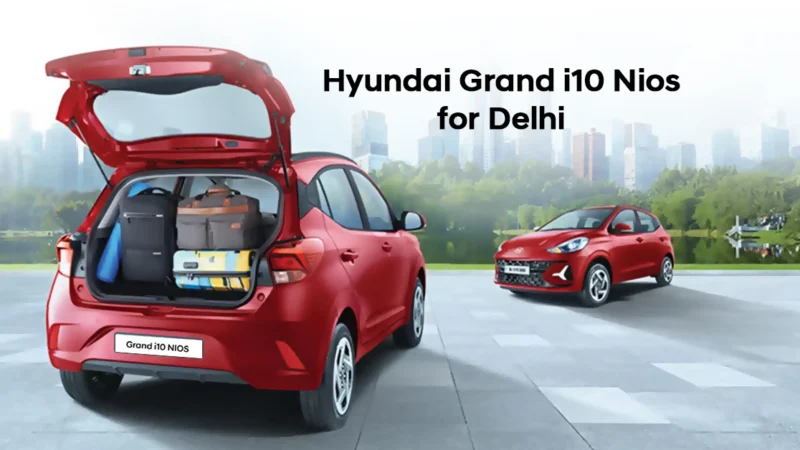
The Hyundai Grand i10 Nios Price in Delhi is another important factor when deciding between the manual and AMT versions.
The Grand i10 Nios starts at ₹5,59,700 (ex-showroom).
The final price depends on the selected variant, transmission, insurance, registration charges and applicable local taxes. The on-road price in Delhi may therefore differ from the ex-showroom amount.
When comparing the two transmission options, consider these points:
- Manual variants: Compare the prices and features of the available petrol manual trims.
- AMT variants: Check the additional amount for the AMT option and the features offered in the corresponding trim.
- On-road pricing: Include insurance, registration and other applicable charges before finalising your budget.
- Variant selection: Compare the equipment available in each version instead of making your decision based only on transmission.
The current Hyundai lineup includes manual and AMT options across selected petrol variants, such as Corporate, Sportz and Asta, with availability depending on the variant and model configuration.
Manual or AMT: Which One Is Right for You?
There is no single answer for every buyer. Both transmissions have their advantages, and the right choice depends on how you plan to use your car.
Choose the manual Hyundai Grand i10 Nios if:
- You prefer controlling gear changes yourself.
- You are comfortable operating a clutch.
- You enjoy a more involved driving experience.
- Your regular routes include a mix of city and open-road driving.
Choose the AMT Hyundai Grand i10 Nios if:
- You frequently drive through congested city roads.
- You want to avoid repeated clutch operation.
- You prefer automated gear changes.
- You want a more convenient option for everyday commuting.
For buyers who spend considerable time in Delhi traffic, the AMT version may offer greater everyday convenience. However, drivers who enjoy manual gear control may find the manual version more suitable.
Visit the Hans Hyundai Grand i10 Nios showroom to test drive and explore the Grand i10 Nios!
Frequently Asked Questions
1. Is the Hyundai Grand i10 Nios available with both manual and AMT transmissions?
Yes. The Hyundai Grand i10 Nios offers a five-speed manual transmission and an AMT option with its 1.2-litre Kappa petrol engine. Availability depends on the selected variant.
2. Which is better for city driving: manual or AMT Grand i10 Nios?
The AMT version can be more convenient for frequent city driving because it does not require clutch operation. The manual version may suit drivers who prefer controlling gear changes themselves.
3. Does the Hyundai Grand i10 Nios AMT have a clutch pedal?
No. The AMT version automates clutch operation and gear changes, so the driver does not need to operate a clutch pedal.
4. Is the manual Hyundai Grand i10 Nios suitable for highway driving?
Yes. The manual version allows drivers to select gears according to road conditions and driving preferences. It can be suitable for both city and highway use.
5. Does the Hyundai Grand i10 Nios AMT cost more than the manual version?
The price depends on the selected variant and transmission. Compare the corresponding manual and AMT trims through Hyundai’s official price information or an authorised dealership to understand the difference.
Book Your Hyundai Grand i10 Nios Test Drive at Hans Hyundai
Still deciding between the manual and AMT Hyundai Grand i10 Nios?
Visit Hans Hyundai to compare the available variants, understand their features and get the latest price details. Discuss your daily driving requirements with our team and arrange a test drive to assess both transmission options.
Visit us today!